Reading that starts with wanting to
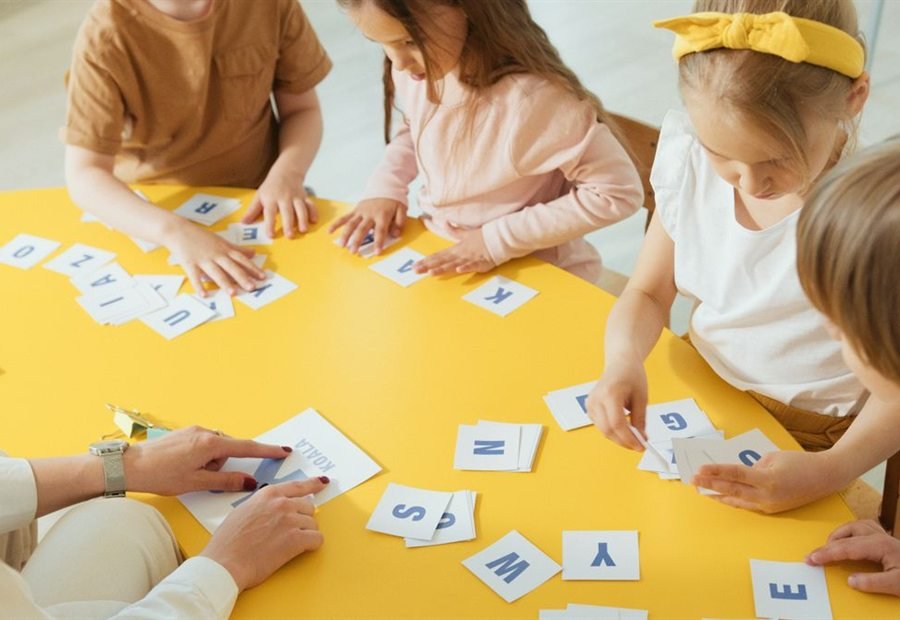
Children who are read to well become children who want to read. Our phonics programme is systematic — letter sounds in a fixed order, revisited daily — but it sits inside a room full of stories, puppets and picture books that children pick up because they want to, not because they were told to.
Sessions are short and frequent. Fifteen focused minutes twice a day does far more at this age than an hour of sitting still, and it leaves the rest of the morning free for the garden, the story corner and the writing table.
What your child will learn
- All 44 letter sounds introduced in a fixed, evidence-based order.
- Blending and segmenting — turning sounds into words and back again.
- Story language — retelling, predicting and inventing endings of their own.
- Early writing — name writing, labels and captions for their own pictures.
A typical session
| Time | Activity |
|---|---|
| 9:00 – 9:15 | Sound of the day, actions and rhymes |
| 9:15 – 9:45 | Small-group blending games |
| 9:45 – 10:30 | Free choice: writing table, book corner, puppets |
| 10:30 – 11:00 | Snack and garden break |
| 11:00 – 11:20 | Shared story and story-map talk |
| 11:20 – 12:00 | Library swap and one-to-one reading |
Common questions
That is entirely normal at three. We start with listening games — rhythm, rhyme and hearing sounds in words — and only move to letters when a child is ready. Nobody is pushed.
Read aloud for five minutes a day and let them choose the book, even if it is the same one for a month. That single habit outperforms every worksheet we could send home.
They join the extension group for comprehension and writing while the rest of the room does sounds. Nadia plans this individually and reviews it every half term.