Parents ask us this at almost every tour: what do you actually do all day that I could not do at home? The honest answer is that most of it you could — the difference is structure. Here are six activities from our toddler and preschool rooms, with the reasoning behind each one, so you can borrow both the idea and the thinking.
Start with one activity, not six
A table covered in choices reads as chaos to a two-year-old. We set out one invitation at a time, leave it long enough to be properly explored, and only then swap it. Ninety per cent of engagement problems at home are solved by putting four of the five options away.
1. The posting box
A shoebox with a slot cut in the lid and a pile of lids, cards or lolly sticks. Endlessly repeatable, which is exactly the point — repetition is how young children consolidate a new skill, and posting builds the same grip they will later need for a pencil.
2. Water and a paintbrush
Outdoors, a bucket of water and a decorating brush. Children paint the wall, the fence, the paving. It dries, so they do it again. Gross-motor arm movements like these come before letter formation, not after it.
3. Sorting the shopping
Hand over the unpacking. Tins here, boxes there, cold things in a pile by the fridge. It is sorting by category — the foundation of early maths — and it happens to be genuinely useful, which children notice and enjoy.
4. Cooking something real
Not a decorated cupcake. Something you actually need: pancakes, soup, dough. Counting cups, watching a change of state, waiting for a timer. Waiting is a skill, and food is the most motivating way to practise it.
5. The story walk
Walk the same route you always walk, but narrate it as a story with your child as the main character. Language grows fastest when it is attached to something the child can see and touch.
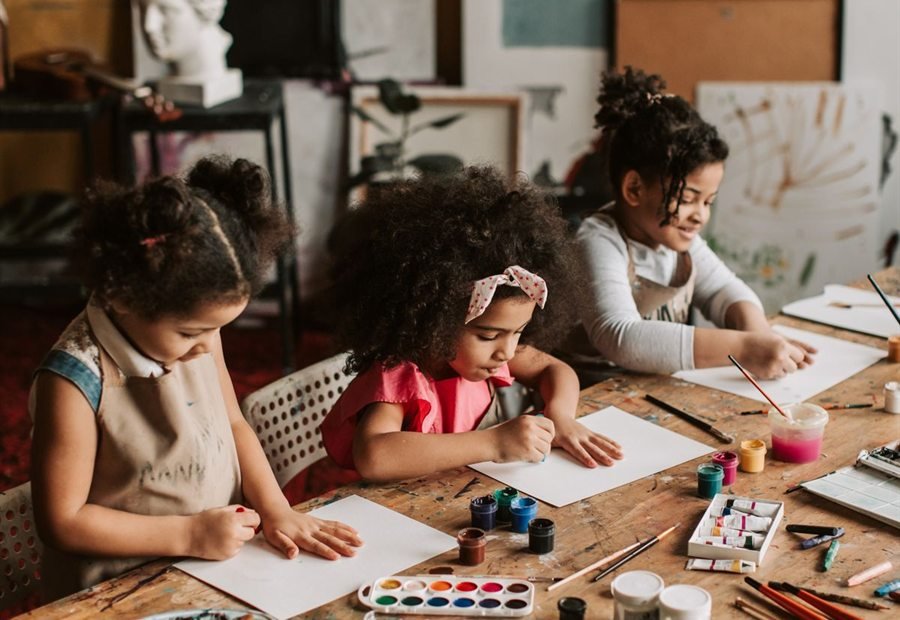
6. Big paper, small child
Tape a roll of paper to the floor and let them draw across all of it. Scale changes the activity entirely — a child who refuses a colouring book will happily cover two metres of lining paper.
When it stops working
Every activity has a natural end, and it usually arrives before the adult expects it. Stop while there is still interest left in the tank. It sounds counterintuitive, but ending at the peak is exactly what makes a child ask to do it again tomorrow.
- Set out one thing at a time and leave it long enough to be explored properly.
- Narrate what you see rather than directing what to do next.
- Finish before they do — stopping early is what makes tomorrow easy.

Nadia Sharif
Centre Manager
Nadia has worked in early years for seventeen years and has led Brightpath since 2019.